Yesterday we broke down our sixth and final experiment! We have several more days to go before arriving (and departing from) McMurdo Station, so we are using this time to examine slides, analyze some of our results, and to begin the task of packing up our scientific gear for its return trip home.
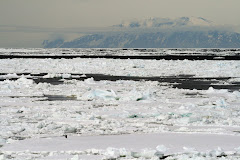
 Many research cruises spend weeks at sea in the open water without land or substrate of any kind, asituation similar to our experience here in the polynya. It is continuing to get darker each night and the temperatures have dropped slightly. In many areas, we have also seen pancake ice, which are small, pancake-shaped pieces of ice and are the first stages of sea ice formation; all of these indicators of an ending summer in Antarctica, and an end to our time in this beautiful, far-off place.

 We began our fifth experiment yesterday in an eastern region of the Ross Sea known as the South central Polynya (much of our work was previously conducted in the western section). The polynya (an ice-free region) occurs seasonally and is dominated by a small phytoplankton known as Phaeocystis, which is considered to be – because of its small size and its ability to form gelatinous colonies –inedible to many zooplankton species. This experiment will help us determine what feeds on this small alga and if the structure of the microbial food web here differs as a result.
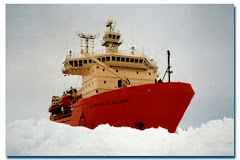
 Yesterday we left McMurdo Station and traveled a short distance to a new experimental station located near beautiful Cape Boyds. The cape is home to an Adelie penguin rookery and mesmerizing scenery. Our transit out of McMurdo towards this location was equally incredible. Soon after leaving the dock, a flockof Adelie penguins began swimming ahead of our boat as if to bow ride our large icebreaker. In the mix were 2 emperor penguins – a rare and very enjoyable sight for us on this trip. The emperors were noticeably larger than the Adelies and altogether more colorful. They were also incredibly fast. Many Weddell seals could also be seen resting on the fast ice. We also encountered several minke whales (one of which swam directly under our ship – what a sight!) and approximately 30 orcas as we made our way toward the open water of McMurdo Sound and the Ross Sea Polynya.


 We are presently at 77° 50.730 South latitude, the farthest south anyone can travel in the worldby ship. We arrived here yesterday after breaking ice through the channel leading to McMurdo. Thechannel is a narrow stretch of open water and was created by an icebreaker that previously cut through the thick fast ice here for access to the station. McMurdo is home to the United States Antarctic program and currently houses 1100 people during the summer. It is also an active military base. The base is situated next to a historic hut inhabited by Scott and his men in the early 1900’s during an expedition here. The New Zealand (Kiwi) base is also nearby. McMurdo is a strange place for sure. The buildings are built to withstand the strong winds and winter storms and so are not specifically pleasing to the eye. There are many amenities of home here – a store, hospital, dining services, bars, fire department, and even bowling! There are several dorms and laboratories and offices. There is also a post office. Most of the people currently down here spend on average 3-4 weeks here during the Antarctic summer, but a few over-winter, or continue south for the South Pole station (brrrr!).


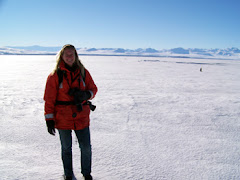
 A couple of days ago, we had a big treat as our icebreaker stopped in some fast ice (the ice which forms against the continent) and lowered the gangway for us to disembark onto the ice! The ice was approximately 6 feet deep and a couple of experienced crew went out beforehand prodding the snow/ice for holes and setting up perimeters for us to maintain.
 What an incredible sight – our first view of the Antarctic continent! We reached Cape Adare - a peninsula of Antarctica marking the entrance into the Ross Sea – early yesterday morning. The views were spectacular – snow-capped mountain ranges soaring into the sky and gigantic tabular icebergs lining the coast, each having been stranded by the shallow waters that immediately surround the continent.
 We are now at 70°S in the Southern Ocean, approaching the Antarctic continent to our west and south and entering into the Ross Sea.
.jpg)